


11.01.26 15:02 
Declaring and disabling: TNPF neutralises Tamil sovereignty, self-determination & referendum
Declaring and disabling: TNPF neutralises Tamil sovereignty, self-determination & referendum



|
|
Know the Etymology: 50
Place Name of the Day: Thursday, 23 March 2017 Nallūr, Mūtūr, Campūr, Nallura, Palē-ūruvaநல்லூர், மூதூர், சம்பூர், நல்லுர, பலே-ஊருவNallūr, Mūtūr, Campūr, Nallura, Palē-ūruva Nal+ūr Mutu+ūr Campu+ūr Nal+ura Palē+ūruva The good or prosperous city/ town/ village The ancient town/ village The village found with Campu reed The good or prosperous town/ village The old or former town/ village
In Tamil usage, Ūr is the most common and most prestigious word for a village. It is also used in speech to mean one's home place or home country. In ancient Tamil usage, Ūr was an affluent, well-established and protected settlement, having its own fame and identity. The term stood for a city or town as well. It is the most popular settlement-related term found used in the Tamil Brahmi inscriptions. Ūr is listed as Dravidian (DED 752). The etymology may be related to the verbs, Uṟu and Uṟai, meaning to dwell (DED 710). Nallūr, a phrase of the components Nal and Ūr, and literally meaning a good/ benevolent/ prosperous village or town/ city in Tamil, was found used to stand for prestigious places including capitals in ancient Tamil. The phrase, seen from the Caṅkam times, became more popular in the early medieval centuries. Mūtūr, a phrase of the components Mutu and Ūr, and literally meaning an ancient village/ town/ city, was found used in standing for settlements of a long heritage, including capitals like the city of Matirai/ Maturai and Kāñci. See boxes above on the etymology of Nal and Mutu. Nallura and Nallūruva noticed in Sinhala place names correspond to Nallūr in Tamil. Nallūr in Caṅkam Tamil usage: “தாங்கா உறையுள் நல்லூர்” (புறநானூறு, 24: 17) “Tāṅkā uṟaiyuḷ Nallūr” (Puṟanāṉūṟu, 24: 17) The good village or town of overcrowded houses “இடைக்கழி நாட்டு நல்லூர் நத்தத்தனார்” (சிறுபாணாற்றுப்படை பாடியவர்) “Iṭaikkaḻi-nāṭṭu Nallūr Nattattanār” (Author of Ciṟupāṇāṟṟuppaṭai) Nattattanār (personal name) of the village/ town called Nallūr in the territory of Itaikkaḻi-nāṭu Mūthoor in Caṅkam Tamil usage: “விழவு மேம்பட்ட பழவிறல் மூதூர்” (பெரும்பாணாற்றுப்படை 411) “Viḻavu mēmpaṭṭa paḻaviṟal mūtūr” (Perumpāṇāṟṟuppaṭai 411) Mūtūr, the place of ancient fame and of many festivals [the city of Kāñci in this context] Palē-ūra, now treated as a Sinhala place name in Vavuniya South Sinhala division, where settlement activities took place in the last century, obviously means an old village or former village that existed there. Palē in this context corresponds to Paḻa/ Paḻaya in Tamil, meaning old or former. Sinhala itself has a cognate Paḷamu meaning the same, corresponding to Paḻama in Malayalam and Paḻamai in Tamil. The prefix Campu as found in Campūr, stands for a kind of reed, as this prefix is noticed in this meaning in other Eezham Tamil place names too. In Campūr itself there is a pond called Campuk-kuḷam, and a marsh called Campuk-kaḷi-villu (One Inch sheet). The Campu reed grows along freshwater sources and in marshes. The terms Campu, Campaṅ-kōrai and Caṇpu, meaning elephant grass, is listed as Tamil/ Dravidian. Hambu-pan in Sinhala means the same species (C/ H change). There is a probability that Paṁba in Sinhala and Pampai in Eezham Tamil, meaning a kind of reed that is used in making effigies, scarecrows etc., is also related to the same term (C/ H/ P change). See another column on Paṁba. The term Campu/ Caṇpu may also be related to its mace-like flower, as Ceṇtu means the same in Tamil/ Dravidian. See box on Campu. Nallūr, which was once the capital of the Kingdom of Jaffna, is headquarters of a division by its name in Jaffna district. There are two other places having the name Nallūr in Poonakari division of Kilinochchi district and in Mūtūr division of Trincomalee district. Mūtūr is headquarters of a division by its name in Trincomalee district. Campūr is a place in Mūtūr division of Trincomalee district. A pond called Campuk-kuḷam is found at this place (One Inch sheet) Nallura is in Panduwasnuwara West division of Kurunegala district. Pale-ūruva is a place in Vavuniya South Sinhala division of Vavuniya district Some related place names: Ūr: Puttūr: Valikamam East, Jaffna Pācaiyūr: The village paying fishing tax; or the village taken the fishing contract; Jaffna division, Jaffna district Uḻavaṉūr: The village of cultivators; Ka'ndaava'lai division, Ki'linochchi district; Oddusuddaan division, Mullaiththeevu district Eḻuttūr: The village that was endowed; Mannaar Town division, Mannaar district Marakkāyarūr: The village of a navigator (Marakkaayar: usually a Muslim navigator); Musali division, Mannaar district Kurukkaḷūr: The village of a Saiva Brahmin; Oddusuddaan division, Mullaiththeevu district Murukaṉūr: The village of God Murukan; Oddusuddaan division, Mullaiththeevu district Kuruntūrk-kuḷam: Karathuraippattu, Mullaiththevu Kaḷappūr: The village of the backwaters; Kaaraitheevu division, Amparai district Kaṭalūr: The seaside village; Koa'ra'laippattu division, Batticaloa district; Kuchchave'li division, Trincomalee district Pālaiyūr: The village of a Paalai tree; Ea'raavoor pattu division, Batticaloa district Vēlūr: The village of the Veal (God Murukan worshipped in the form of Veal), Kuchchave'li division, Trincomalee district Kallaṭi-vēlūr: The village of the Veal (God Murukan worshipped in the form of Veal), which is part of the Kalladi village; Manmunai North division, Batticaloa district Tiruccentūr: The village named after Thiruchchenthoor in Tamil Nadu; Manmunai North division, Batticaloa district Makiḻūr: The village of Makizha trees; Ma'nmunai South division, Batticaloa district Nintavūr: Ninthavur, Amparai Ērāvūr: Eravurpattu, Batticaloa Putūr: Koralaippattu North, Batticaloa Centūr: The village named after Thiruchchenthoor in Tamil Nadu; Kuchchave'li division, Trincomalee district Tañcāvūr: The village named after Thagnchaavoor in Tamil Nadu; Kuchchave'li division, Trincomalee district Cēṉaiyūr: The village of the shifting cultivation field; Mūtūr division, Trincomalee district Tiruk-kaṭalūr: The sacred seaside village; Trincomalee Town and Gravets division, Trincomalee district Tōppūr: Tōppu+ūr; Mūtūr, Trincomalee. Tōppu: grove; from Tokuppu > Tōppu; Toku: (verb) to collect, to assemble, accumulate, (Tamil, DED, 3476) Tirumēṉiyūr: near Kuñcukkuḷam, Vavuniya (One Inch sheet). Tirumēni: a term meaning a priest or a person who intimately handles the image of a deity. Ūr-vaṇikaṉ-paṟṟu: Pachchlaippali. Kilinochchi Ūreḻu: Ūr+eḻu: Valikamam East, Jaffna. Ura, Ūruva: Nallūruva: Panadura, Kalutara Kollura: Polgahawela, Kurunegala Kalayanūruva: near Pūmaṭu, Vavuniya South, Sinhala Division, Vavuniya (One Inch Sheet) Campu: Camput-tuṟai: a coastal place near Mātakal, Jaffna. The place is identified with Jaṁbu-kola-paṭṭana of Pali chronicles. Tuṟai: port Campuk-kuḷam: Mūtūr, Trincomalee; Kandavalai, Kilinochchi. The former is found at Campūr (One inch sheet) Campuk-kaḻi-villu: a marsh found in Campūr, in Mūtūr, Tricomalee. Villu: marsh, pond; Kaḷi: alkaline soil; Kaḻi: sea arm Campuk-kaḻi: a locality in Marutaṭic-cēṉai (V-Almanac) Campuk-kēṇi: Eravurpattu, Batticaloa Campu-nakar: Addalaichchenai, Amparai. Nakar probably replaced an earlier suffix Sembu: Sembu-kuliya: Mahakumbukkadawala, Puttalam. Sembu: either from Campu grass or from Cēmpu an aquatic yam Sembu-kaṭṭiya: Madape, Puttalam. Sembu: see Sembu-kuliya Sembu-kulama: Thirappane, Anuradhapura. Sempu: see Sembu-kuliya Cempi, Cempaṉ: Cempi-mōṭṭai: Kinniya, Trincomalee. Cempi: see Sempu-kuliya Cempaṉ-kuḷam: Poonakari, Kilinochchi. Cempaṉ: see Sembu-kuliya Cempaṉ-kuṇṭu: Poonakari, Kilinochchi. Cempan: see Sembu-kuliya Notes: Campu: Campu (Typha augustifolia) is a reed or sedge that grows in pools of stagnant water or along the fringes of tanks, lakes and reservoirs. It is known for it luxuriant growth and is widely found in the island. It prevents coastal erosion and provides nestling for water birds and other aquatic life. The Campu reed can be easily identified from its cylindrical and rod-like flowers. The upper half of the flower is the male part and the lower is the female part. The male part withers, leaving a thickened female part of seeds. In some parts of the world, the reed and its flowers are considered edible. The reed is used for thatching and to make coarse baskets and mats. Campan-kūṭu or Campan-kūṭai is a basket and Campaik-koṅkāṇi is a hood to cover head and shoulders, made of this reed. Campaik-kōḻi, a water bird mentioned in the early Tamil lexicons, is said to eat the flowers of the reed. Caṇpu is the name of a reed grass found in early Tamil diction, which is equated with Campu reed. Caṇpai is a place name referred to in Maṇimēkalai, which was probably connected to the Caṇpu reed. It was one of the names of Cīrkāḻi, situated in the estuary of Kāvēri River. Also note the following relevant usages in the old Tamil lexicons: Cammaṭṭi (Ceṇṭu: mace) and Cāppai (reed-mat).  Trincomalee Map
, photographed in Vanni [Photo: TamilNet]) The tall reed called Champu (Typha augustifolia), photographed in Vanni [Photo: TamilNet]
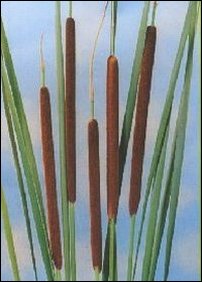 Champu flowers [Courtesy: www.acquaingros.it]
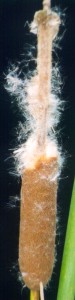 The withering of Champu flower [Courtesy: naturia.per.sg]
: Stalks showing the female part of the flowers. Note the trace of the dissapeared male part in a flower and a source of water in the background. Photographed in Vanni. [Photo: TamilNet]) Champu (Typha augustifolia): Stalks showing the female part of the flowers. Note the trace of the dissapeared male part in a flower and a source of water in the background. Photographed in Vanni. [Photo: TamilNet]
, photographed in Vanni [Photo: TamilNet]) A glade of Champu reed (Typha augustifolia), photographed in Vanni [Photo: TamilNet]
Revised: Thursday, 23 March 2017, 23:30 First published: Wednesday, 08 August 2007, 01:00
Previous columns:
|
Latest 15 Reports
|
||||||||||||||
|
Reproduction of this news item is allowed when used without
any alterations to the contents and the source, TamilNet, is mentioned |
||||||||||||||||
|
News | Features | Opinion | Palaka'ni | Photo Features | TN Transcription
Web feeds | Feedback | Home | About us |
 URL: http://www.tamilnet.com