

11.01.26 15:02 
Declaring and disabling: TNPF neutralises Tamil sovereignty, self-determination & referendum
Declaring and disabling: TNPF neutralises Tamil sovereignty, self-determination & referendum



|
|
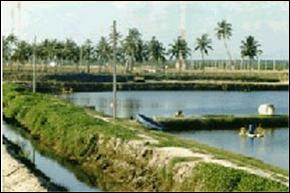
Impact and Issues of Forestry on Northeast Coastal Resources[TamilNet, Saturday, 01 March 2003, 23:00 GMT]There is an urgent need for protection of mangroves, estuarine and swamp forest/vegetation as important components of the northeast coastal resources of Sri Lanka together with fisheries, coral reefs, seagrass, beaches and sand dunes, amongst others if we are to preserve the environment of Northeast for future generations. An examination of forestry issues that impact the conservation and management of North East coastal resources follows. Despite their social, economic and environmental importance these resources had remained badly neglected in the past. As part of the resettlement and humanitarian efforts under the ongoing ceasefire and peace process a welcome new window of opportunity exists to create general awareness and consciousness by conserving and managing these valuable resources on a sustainable basis together with ways and means of full realisation of their potential benefits. An examination of the issues involved forms an important adjunct to such road map. The most complex among coastal resources from an environmental standpoint are mangroves and estuarine forests and vegetation and their associated ecosystems which are found in several lagoons, bays, river mouths and sheltered locations dotted along the northeast coast (see map). By definition, vegetation is classed as ‘forest’ when its maximum attainable height in a given habitat exceeds 5m. It is to be noted that low mangrove vegetation is not represented on the map. The photo depicts an example of the latter type.  Mangrove forest from Mundal (South of Puttalam) (click on figure for a larger picture) The extent of mangrove vegetation in Sri Lanka is not clear because statistics appear to vary from source to source even at a fixed point of time. What should be of concern is that their extent is steadily dwindling owing to natural process of physical coastal erosion but more to anthropogenic reasons. The extent of mangroves in the northeast along with other relevant data is given in the Table below:
In general, the floristic composition of mangroves is limited, numbering up to 20 species1, with an abundance of low growth Avicennia officinalis predominating in the northern coast while the eastern coast has taller trees with Rhizophora up to about 10m height as dominants with open canopies. Many of the utilisable trees have been heavily subject to felling by local people because of open access although, in a legal sense, these areas belong to the state. The total absence of participation nor of any kind of common understanding with local people for sustainable conservation and management of coastal resources, whether for fisheries or forest products, have compounded the problem. The foregoing situation appears to be changing somewhat since 1981, at least in the south, with the enactment of the Coastal Conservation Act (CCA) under which a national strategy and a national coastal zone management plan were outlined and approved with provision for preparation of special area management plans (SAMP) for specified coastal areas which will also serve as pilot demonstrations. The CCA also defines the Coastal Zone as the area lying between 300m from high water line on the leeward side and 2 km seaward from the low water line which serves as convenient reference points for our purposes2. Other than mangroves, there probably yet exist patches of natural coastal vegetation like thornscrub and dry zone forests representing residual climax types for the northeast. Conservation of these areas, where found, will not only ensure continuation of natural coastal biodiversity but also serve an important protective function from storms and strong winds especially during the northeast monsoon. Also, potential sites which once carried these forest types in uninhabited areas of the coastal zone offer good possibilities for conversion to productive forest plantations with suitable species to serve not only shelterbelt functions but also to meet heavy local demands for a variety of forest products. Small extents of plantations of Casuarina equisetifolia and Eucalyptus camaldulensis had been successfully raised several years ago on sandy soils near Pallai and hold promise for the future. Yet two other coastal resources refer to the presence of salt marshes and sand dunes in the northeast about which there is very limited information. Sand dunes are known to be shifting in certain areas along the northern coast but their stabilisation poses challenges.  Click on figure for a larger picture. Source: Vegetation details, Sri Lanka National Atlas The Issues Following are some major issues which are foreseen to merit consideration in any new initiatives in the northeast coastal areas :
Integration of multiple types of coastal resources, of related activities on an area-basis, of participation of local people and of the principle of sustainability for cohesive coastal management have been accepted as essential requisites of policy at global and national levels. A specific policy statement relating to mangrove/estuarine resource conservation is as yet lacking. Gender issues such as a distinct role for the active participation of women would be an important element of policy. The ambit of the national environment policy will also govern the scope of policy at the regional and local levels in so far as it applies to coastal resources. To a major extent fine-tuning of these policies by policy makers at sub-national levels will depend on the outcome of information generated from reconnaissance-level regional and local surveys.
The basis for planning at any level will depend on the preparation of a rational land-use plan for coastal areas as an essential first step. The selection of any future area in the northeast will depend, in the first instance, on agreed environmental and socio-economic criteria by the regional policy makers for developing special area management plans by multidisciplinary teams. The experiences in implementing the two SAMPs in the south will be useful in determining positive aspects which can be beneficially utilised for planning while avoiding negative pitfalls.
Sampling and inventorisation of coastal resources like fisheries, forestry, river systems, ground water flows, sediments and associated ecological studies as well as socio-economic profiles and rural appraisals affecting local people require the availability and participation of trained personnel from relevant disciplines. In most countries with mangrove forests natural regeneration alone is insufficient and unreliable to restore adequate stocking with the right species mix. Hence resort to artificial regeneration has been made with success in several countries of Asia, Africa and South America. Experiences show that the methodologies to meet individual ecosystem need to be worked out in advance as this has not been attempted before in the northeast. Some pioneering work in this direction has been under way in the Puttalam lagoon by a local cooperative, which could provide useful insights for possible replication or adaptation3.
The cooperation of local people will be also essential in preventing damage to activities undertaken under any agreed plan. For instance, planting of trees and home gardens can suffer if there is free ranging cattle. Likewise, without the active cooperation of the people mining for sand and coral or illicit felling of trees will be difficult to prevent. Under the CCA there is provision for the grant of user rights in the coastal zone on permits issued by the appropriate authority. The grant of permits for flexible periods to user groups to conserve and manage agreed extents of mangroves and coastal areas is a likely incentive to participate in tree planting and other agreed activities in exchange for controlled harvests e.g fisheries or other products, as appropriate, in areas cultivated by them according to an agreed plan. If this system proves workable after initial trials it could, with least cost to the state, assist in converting hitherto unproductive areas to productivity besides social and economic upliftment of local people.
The conduct of research trials for different possibilities of combining mangrove vegetation with artificial farming of fish and shrimps(silvi-pisciculture) to obtain optimum results as practised on a management scale in some Asian countries e.g Indonesia and Vietnam as compared with complete removal of the vegetative cover will be well worth consideration.. The development of acceptable criteria and indicators for sustainable conservation and management of mangrove ecosystems in keeping with universally accepted standards will be essential in the long-term. Among the most challenging tasks will be the relevant training of local people and user-groups through well established extension services. In view of the pioneer nature of coastal resource management there will be a lot of learning by doing and taking corrective actions before stable systems can be established. Serious commitment will therefore be needed from the outset. References:
Related Articles:
|
Latest 15 Reports
|
||||||||||||||||||||||||||||||||||||||||||||||
|
Reproduction of this news item is allowed when used without
any alterations to the contents and the source, TamilNet, is mentioned |
||||||||||||||||||||||||||||||||||||||||||||||||
|
News | Features | Opinion | Palaka'ni | Photo Features | TN Transcription
Web feeds | Feedback | Home | About us |
||||||||||||||||||||||||||||||||||||||||||||||||
 URL: http://www.tamilnet.com